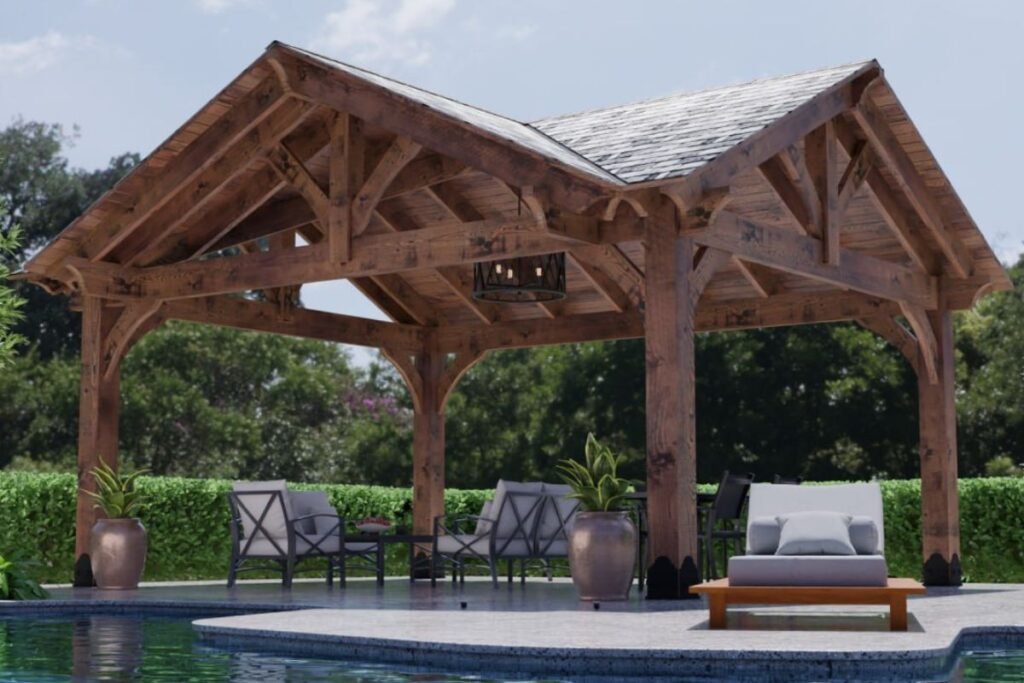
You stand in your backyard, coffee in hand, imagining a pavilion that finally makes the space feel finished. You want something that feels permanent, not a weekend experiment, but you also do not want to overspend or overbuild for how you actually live. If you have ever compared photos online or walked through a garden center, you already know how confusing the choice between heavy timber and light timber can feel.
One promises strength and legacy, the other promises flexibility and speed, and both look good enough in pictures to make the decision feel harder than it should. This guide exists to help you choose with confidence, not just based on trends or sales talk, but on how these structures really behave in daily life, different climates, and real budgets.
What Is a Heavy Timber Pavilion?
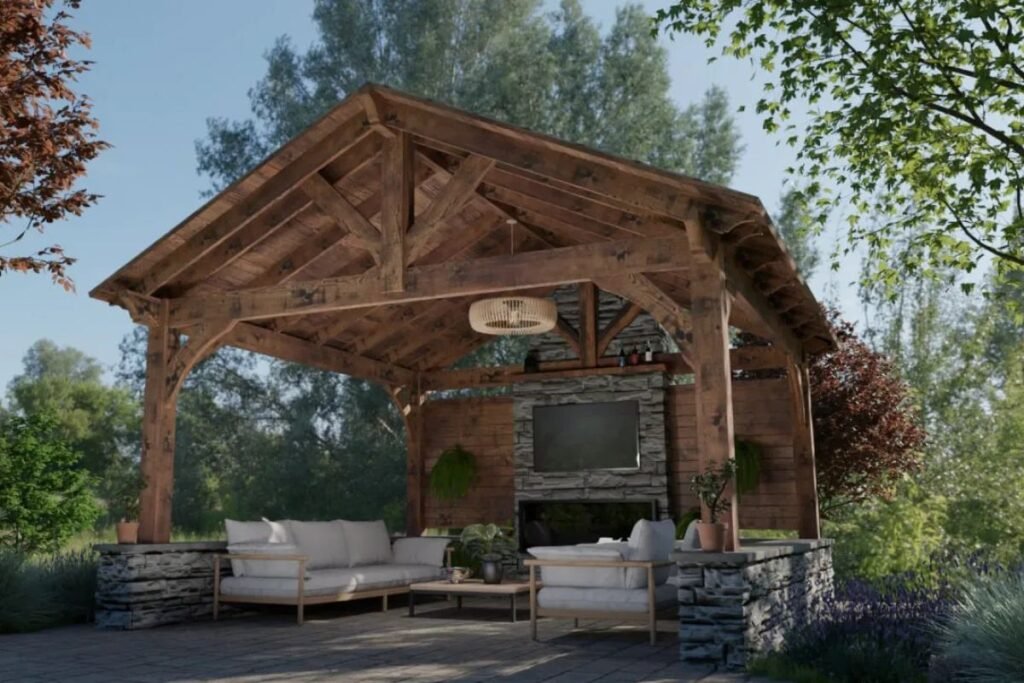
A heavy timber pavilion is built with large-section posts and beams, often using materials like oak, Douglas fir, or engineered glulam, and you can usually recognize it instantly by the visual weight and calm authority it brings to a space. When you walk under one, you feel the difference, because the structure does not just sit in the landscape, it anchors it, and that sense of permanence is why many public parks and premium homes lean this way. You often see this style in projects like Heavy timber Pavilion USA or Heavy timber Pavilion Canada, where climate, snow load, and long-term durability matter more than short-term savings, and that context shapes how the structure is engineered.
From a practical point of view, you are choosing thicker members, stronger joinery, and a build that expects to stay in place for decades, not just a few seasons. Emotionally, it feels like choosing a stone fireplace over a portable heater, because both can do the job, but only one becomes part of the story of the place.
Pros of Heavy Timber Pavilions
The biggest advantage you notice right away is structural confidence, because heavy timber handles wide spans, heavy roofs, and harsh weather without looking or feeling stressed, which matters if you live somewhere with real winters or strong winds. There is also a craftsmanship factor, since exposed beams, traditional joinery, and solid wood surfaces give the pavilion a sense of authenticity that people instinctively trust and admire. Over time, you will appreciate how this type of structure ages, because instead of looking tired, it usually gains character, especially if you maintain it properly with sealing and inspections. From a value perspective, you are not just building shade, you are building a feature that can increase how your property is perceived, which is why many homeowners treat it more like an outdoor room than a simple shelter.
Cons of Heavy Timber Pavilions
The first reality check usually comes with the price, because heavy timber costs more in materials, transport, and labor, and that can feel intimidating if you started this project with a tight budget in mind. Installation is also more complex, often requiring machinery, skilled carpenters, and stronger foundations, which means you are committing to a more involved construction phase. You also need to accept that changes later are harder, because once this kind of structure is in place, it is not something you casually move or resize. In everyday terms, it is like choosing built-in furniture instead of something modular, because you gain stability and quality, but you lose a bit of flexibility.
What Is a Light Timber Pavilion?
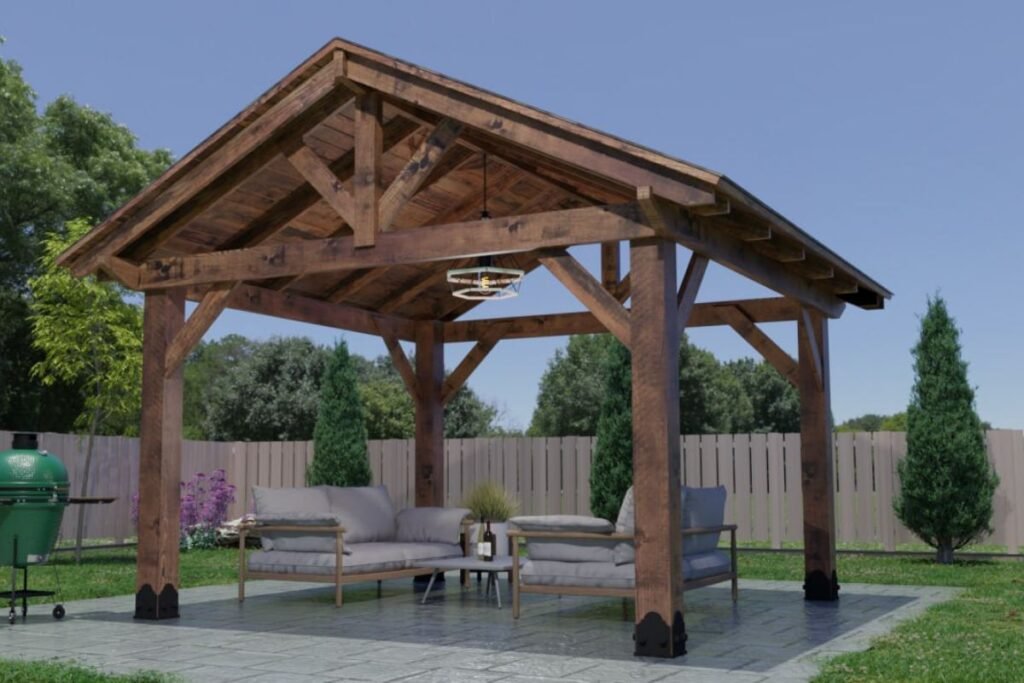
A light timber pavilion uses smaller, lighter sections of wood, often treated pine, spruce, or cedar, and it is designed to be easier to handle, faster to build, and more forgiving if your plans change. This is the kind of structure you see in many suburban gardens, patios, and DIY-friendly projects, where the goal is to create usable shade and shelter without turning the yard into a construction site for weeks. You might not feel the same visual gravity when you stand under it, but you do feel a certain freedom, because these structures adapt well to different layouts and budgets. For many people, this approach fits modern life better, because it respects time, cost, and the reality that not every outdoor space needs to become a permanent architectural statement.
Pros of Light Timber Pavilions
Affordability is usually the first win, because lighter materials and simpler construction methods keep both material and labor costs under control, which makes the project feel achievable instead of overwhelming. You also benefit from speed and flexibility, since many light timber pavilions can be built quickly, sometimes even as kits, and adjusted later if your needs change or your family grows. From a practical lifestyle point of view, this means you get to enjoy the space sooner, instead of waiting through a long planning and building phase. There is also a certain comfort in knowing that if you ever need to relocate, redesign, or remove the structure, you are not fighting against tons of wood and concrete to do it.
Cons of Light Timber Pavilions
The trade-off shows up in strength and longevity, because lighter sections simply cannot carry the same loads or resist the same stresses as heavy timber, especially in demanding climates. Over time, you may notice more movement, more wear, and a greater need for maintenance, particularly if the wood is exposed to moisture, sun, and temperature swings. Visually, some people also feel that light timber lacks the presence and depth that makes a pavilion feel like a true outdoor room rather than a temporary feature. In honest terms, it works well, but it does not usually become a landmark in the way heavier structures often do.
Heavy Timber vs Light Timber: Key Differences
Strength and Structural Performance
When you compare these two options, strength is not just a technical detail, it is a daily experience, because it affects how safe, solid, and calm the structure feels when weather turns rough. Heavy timber excels at carrying wide roofs, handling snow loads, and standing up to strong winds, which is why it dominates in regions where climate is not gentle or predictable. Light timber, on the other hand, performs perfectly well for smaller spans and lighter roofs, but it relies more on proper design limits and regular checks to stay in its comfort zone. The real question you should ask yourself is not which one is stronger in theory, but which one matches the actual demands of your location and how you plan to use the space.
Cost Comparison
Cost is never just about the initial invoice, because you are really balancing upfront spending against long-term value, maintenance, and peace of mind. Heavy timber costs more to buy and build, but it often pays you back in durability, lower risk of structural issues, and a longer service life that can stretch across decades. Light timber saves you money at the start, which can be a huge relief, but you should be honest about future upkeep, possible upgrades, and the chance that you may replace or rebuild sooner. In simple terms, you are choosing between paying more now for stability or paying less now for flexibility, and neither choice is wrong if it matches your priorities.
Appearance and Design Style
Design is where emotions quietly take over, because even if two structures do the same job, they do not make you feel the same way when you look at them every day. Heavy timber brings a sense of gravity, craftsmanship, and tradition, and it often fits beautifully with classic, rustic, or high-end architectural styles that value visible structure. Light timber feels cleaner, lighter, and more modern, which works well in contemporary gardens or spaces where you want the pavilion to support the landscape rather than dominate it. You should trust your instincts here, because you are the one who will live with the view, not the catalog or the installer.
Installation and Build Complexity
Building experience matters more than most people expect, because the process itself becomes part of how you remember the project. Heavy timber usually means professional crews, machinery, and careful coordination, which can be stressful but also reassuring if you like knowing everything is engineered and controlled. Light timber often allows for faster builds, simpler tools, and even partial DIY involvement, which can feel more personal and less disruptive to daily life. Think about not just the final result, but also how much complexity you want to deal with along the way, because that choice affects your stress level as much as your budget.
Maintenance and Lifespan
Maintenance is where long-term reality sets in, because every outdoor structure, no matter how well built, lives in a world of rain, sun, and temperature changes. Heavy timber, when properly sealed and cared for, tends to age slowly and predictably, often becoming more beautiful as the wood develops character and patina. Light timber usually needs more frequent attention, because thinner sections and lighter treatments show wear sooner and react faster to moisture and UV exposure. Your decision here should reflect how much time and energy you realistically want to invest in upkeep, not how optimistic you feel on a good weekend.
Which One Is Right for You? (Decision Guide)
Choose a Heavy Timber Pavilion If:
You should lean toward heavy timber if you see this pavilion as a long-term investment rather than a temporary upgrade, and if you want it to become a defining feature of your outdoor space. This makes particular sense if you live in a climate with snow, strong winds, or heavy rain, where structural confidence is not a luxury but a necessity. You will also appreciate this choice if you care deeply about craftsmanship, architectural presence, and the feeling that the structure belongs to the land rather than just sitting on it. In many ways, this is the option for people who think in decades rather than seasons.
Choose a Light Timber Pavilion If:
Light timber is the smarter choice if your priority is speed, flexibility, and keeping the project financially comfortable without sacrificing basic function and style. It suits smaller gardens, changing family needs, and situations where you want the freedom to modify or even remove the structure in the future without major disruption. You will likely enjoy the faster build and lower upfront stress, especially if this is your first outdoor construction project. This path is about practicality and adaptability, not about making a permanent architectural statement.
If you’re planning a pavilion project and want expert guidance, it’s smart to get help from specialists who understand your local climate and building standards. For projects in the United States, you can take professional advice from norweh.com, where the team works closely with clients to design and deliver durable timber pavilion solutions. If you’re based in Canada, norweh.ca offers the same level of expertise, tailored to Canadian weather conditions and construction requirements. Reaching out to the right local experts can save you time, prevent costly mistakes, and help you choose the right structure for long-term performance and peace of mind.
Cost vs Value: Which Gives Better Long-Term Return?
Value is not just a number you calculate, it is a feeling you get every time you use the space and every time you do not have to worry about it failing or needing major repairs. Heavy timber often wins this conversation over the long run, because its lifespan and durability reduce the chances of expensive surprises and early replacements. Light timber can still offer excellent value if it matches your needs perfectly and if you accept that it may require more frequent maintenance or eventual upgrading. The real return is measured in how well the pavilion supports your lifestyle, not just in how much it costs on paper.
FAQs
Is light timber strong enough for snow?
Yes, for small to medium structures, if designed for local loads.
How long does a heavy timber pavilion last?
Often several decades with proper maintenance.
Can you build both types yourself?
Light timber is more DIY-friendly, heavy timber usually needs professionals.
Which adds more property value?
Heavy timber typically adds more perceived and real value.
Is heavy timber always better?
No, it is better only when your needs justify the cost and scale.
Final Verdict: Heavy Timber or Light Timber?
There is no universal winner here, only the option that fits your space, your climate, your budget, and your expectations for how this structure should serve you. Heavy timber gives you permanence, strength, and a sense of architectural weight that can redefine your outdoor area for decades. Light timber gives you speed, flexibility, and a gentler financial entry point into improving your outdoor living. When you choose with honesty about how you live and what you value, you do not just get a pavilion, you get a space that actually feels like it belongs to you.