
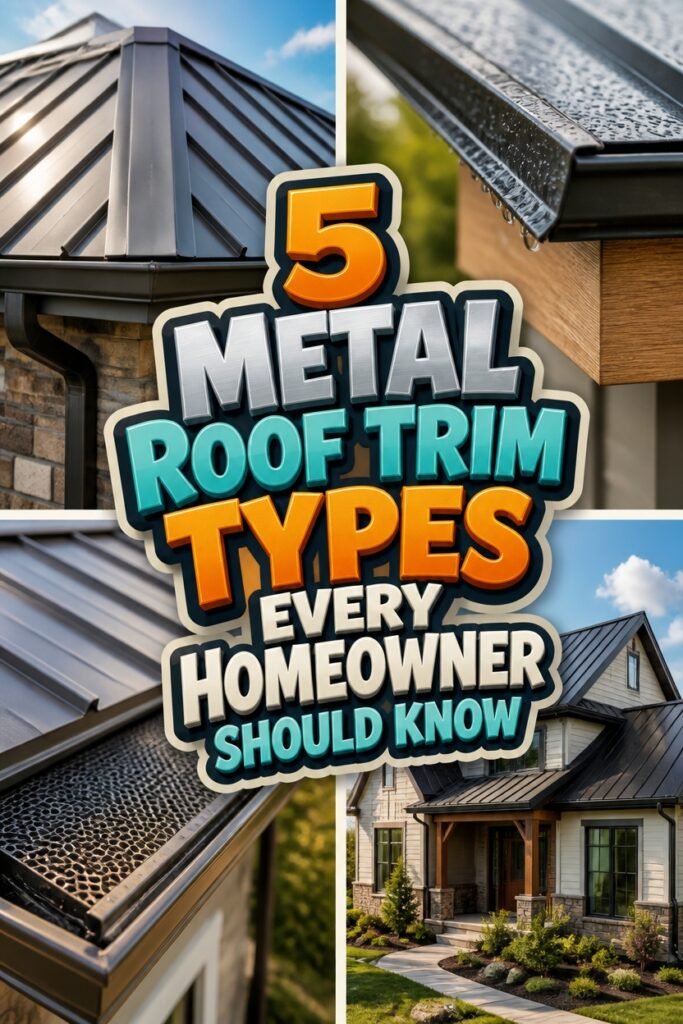
Metal roof trim might not be the first thing you notice about a home, but it quietly does some of the most important work up there.
These unassuming strips of metal seal the edges, direct water away, and protect every vulnerable spot where trouble tends to start.
There are five essential types worth knowing.
Drip edge trim, valley flashing, rake and eave trim, penetration flashing, and ridge cap trim each handle a specific job.
Together they create a complete barrier against rain, wind, and whatever else the sky sends your way.
Understanding how these pieces function makes the difference between a roof that lasts decades and one that causes headaches.
Proper installation matters more than most homeowners realize.
Drip Edge Trim: Your First Line of Defense
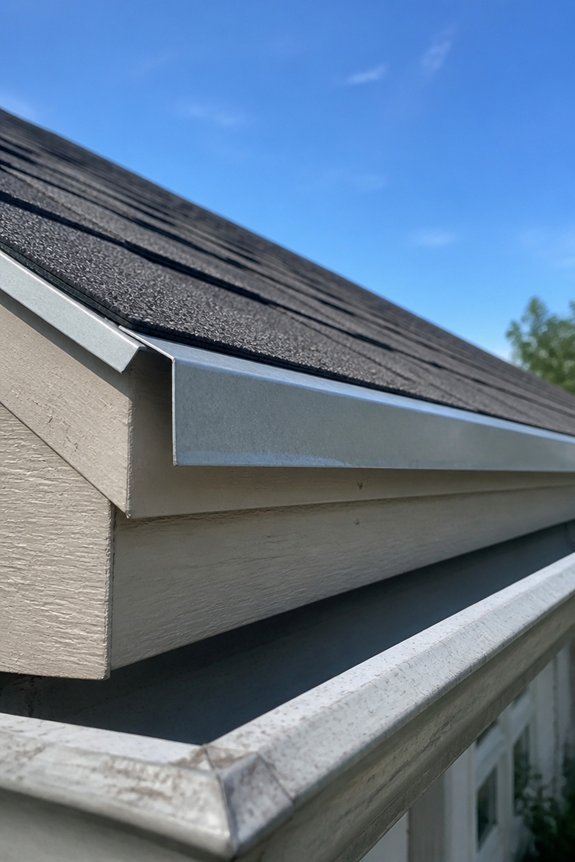
Drip edge trim protects your home where the roof meets the walls and fascia. It stops water from sneaking into places it shouldn’t be.
This metal piece channels rainwater away from vulnerable spots. It shields the structure hiding beneath your roofline from moisture damage.
Most drip edge comes in aluminum or steel. You’ll find two popular styles: the D-style and hemmed profiles. Both do the job well.
Installers fasten the trim along eaves and rake edges. It needs proper overlap with underlayment and shingles. This ensures water flows smoothly into your gutters.
Standard widths run from 1 to 1.5 inches. Check yours periodically for bending, rust, or gaps where it meets the roof deck.
Replace damaged sections quickly. This keeps your water protection intact and spares you costly interior repairs down the road.
Valley Flashing: Managing Water Flow Through Valleys
Valley flashing channels water through the V-shaped valleys where two roof slopes meet. This trim directs rainwater and snowmelt away from vulnerable seams. It keeps leaks out of your home’s interior.
Two Main Types
Open valley flashing leaves the channel visible. This makes debris removal and inspection easy. Closed valley flashing, also called woven or California valleys, covers the channel completely with roofing material.
Materials and Installation
Metal valley flashing typically uses aluminum or galvanized steel. These materials resist corrosion and last for years. Proper installation requires precise alignment with your roof’s slope angle. This ensures water flows downward without pooling.
Maintenance Tips
Clear leaves, pine needles, and other debris from valleys regularly. Built-up material can block water flow. It may also cause ice dams during winter. Inspect valleys once a year, especially after big storms.
Rake and Eave Trim: Protecting Your Roof’s Perimeter
Most homes have two key trim areas at their roof’s edges. Rake trim runs along the sloped sides. Eave trim covers the horizontal edges.
Rake trim protects gable ends where wind-driven rain hits hardest. It channels water away from fascia boards and siding. Eave trim stops water from sneaking behind gutters and damaging what’s underneath.
You have solid metal options for both. Aluminum resists corrosion naturally. Steel lasts a long time but needs some upkeep.
Good installation matters. Overlap pieces so water flows downward. Space your fasteners evenly. Seal every gap where moisture might slip through.
Together, these trims work with your gutters and flashing. They create a complete shield around your roof’s edge. This protection helps your roof last longer and saves you from expensive water damage repairs.
Penetration and Pipe Flashing: Waterproofing Roof Openings
The Challenge of Roof Penetrations
Roof openings create waterproofing problems that standard trim simply cannot solve. Penetration flashing handles these tricky spots where pipes, vents, and other structures break through the metal roof. These flashings form tight seals around each opening. Water stays out where leaks would otherwise start.
Types of Penetration Flashing
Pipe flashing comes in several styles. Boot-style flashings work well for plumbing vents. Chimney flashing handles chimney openings. Specialized designs fit skylights and HVAC ducts. Each type matches the exact size and shape it needs to cover.
Installation Best Practices
Flashing must overlap roof panels the right way. This directs water downward and away from every opening. Quality materials matter too. Galvanized steel and aluminum stand up to the elements. They protect against water damage for years to come.
Ridge Cap Trim: Sealing Your Metal Roof’s Peak
Ridge cap trim protects the peak where two roof slopes meet. This metal covering seals the vulnerable seam against water intrusion.
You’ll find three main styles available. Closed ridge caps create a complete seal. Open ridge caps allow air to circulate. Vented ridge caps include built-in airflow channels.
Aluminum, steel, and copper are common choices. These materials coordinate well with most metal roofing panels.
Installation requires careful attention. Secure the caps with proper sealant or closure strips. Overlaps matter, so check that caps extend far enough down both sides.
Schedule routine inspections when you can. Look for gaps, corrosion, or separation issues. Catching problems early preserves your weatherproofing. Good ridge trim maintenance adds years to your metal roof’s life.
Frequently Asked Questions
What Is the Typical Lifespan of Metal Roof Trim Materials?
Metal roof trim materials typically last 20 to 50 years, depending on the specific material used. Aluminum and galvanized steel trim generally endure 20 to 30 years, while copper and stainless steel trim can exceed 50 years with proper maintenance.
How Much Does Professional Metal Roof Trim Installation Cost?
Professional metal roof trim installation typically costs between $800 and $2,500, depending on roof size, trim type, complexity, and regional labor rates. Most contractors charge hourly rates or per-linear-foot pricing for this specialized work.
Can Homeowners Install Metal Roof Trim Themselves Without Professional Help?
Studies show 60% of DIY roof installations fail within five years. Homeowners can install metal roof trim themselves, though it requires proper tools, safety equipment, and roofing knowledge to guarantee watertight seals and prevent costly damage.
Which Metal Materials Are Best for Different Climate Conditions?
Aluminum trim suits coastal regions due to corrosion resistance. Galvanized steel offers durability in moderate climates. Copper provides longevity in harsh environments. Stainless steel resists rust in all conditions, though costs remain higher.
How Often Should Metal Roof Trim Be Inspected and Maintained?
Metal roof trim should be inspected twice annually, ideally in spring and fall, to identify corrosion, gaps, or debris accumulation. Additional inspections following severe weather events are recommended to guarantee peak performance and longevity.
Conclusion
Metal roof trim functions like a shield protecting a home from weather damage. Homeowners who install drip edge, valley flashing, rake and eave trim, penetration flashing, and ridge cap trim create a thorough waterproofing system. Each trim type addresses specific vulnerabilities, preventing moisture infiltration at edges, valleys, openings, and peaks. Proper installation of these five essential components extends roof lifespan considerably.