
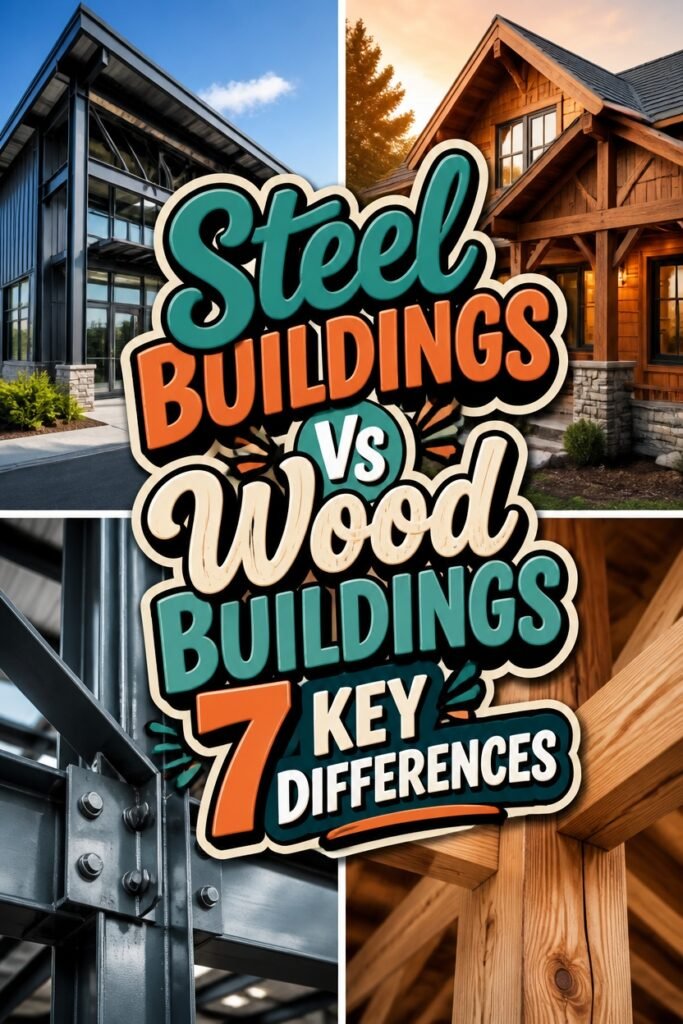
Steel and wood each tell a different story when it comes to building your next project.
One leans into strength and longevity.
The other wins on warmth and accessibility.
Steel asks for more upfront, but it gives back over decades.
Think fifty to a hundred years of life with minimal fuss.
Wood keeps entry costs gentle, though it tends to need more attention as the years pass.
Most timber structures stay solid for twenty to forty years before major work calls.
Choosing between them means weighing what matters most to you.
Budget, timeline, and how you want your space to age all play their part.
Here are seven key differences to help you find your fit.
Steel vs. Wood: Total Cost of Ownership

Looking Beyond the Price Tag
The real cost of a building shows up over decades, not just on day one. Steel structures typically run 5 to 15 percent higher upfront than wood. But that initial gap shrinks quickly once you factor in the years ahead.
Maintenance and Longevity
Steel buildings need very little upkeep. They often last 50 years or more without major problems. Wood demands regular attention. You’ll schedule inspections, treat for rot and pests, and replace damaged pieces along the way.
Insurance and Installation
Steel’s fire resistance and durability usually mean lower insurance premiums. Installation labor costs more for steel at first. Over time, though, steel wins on operational expenses.
Making the Right Calculation
Smart property owners add up projected maintenance, insurance rates, and expected lifespan. For most commercial projects, steel delivers lower lifetime costs despite the higher starting investment.
Weather Resistance: How Steel and Wood Compare
Steel holds up better against daily weather than wood. This durability creates much of its long-term cost advantage.
Wood faces ongoing threats from rot, termites, and moisture. It needs regular painting, sealing, and decay checks. Steel avoids these problems entirely. It won’t warp, crack, or splinter when temperatures shift or humidity swings.
Still, steel has its own vulnerability. Without protective coatings, rust becomes a risk in humid or coastal areas. Wood naturally sheds some water but eventually absorbs it. That absorption weakens the structure over years.
Both materials need weather protection. Steel typically needs less frequent attention. The best choice depends on location, climate, and how much maintenance you can handle.
Fire Safety: Which Material Meets Building Codes
Steel Structures
Steel resists flames directly. It maintains structural integrity during fires, though extreme heat can weaken it. Steel typically achieves higher fire ratings without extra treatments.
Wood Buildings
Wood needs fire-resistant treatments and protective barriers to meet code. Intumescent coatings and gypsum board are common solutions. These additions help wood match safety requirements.
Shared Requirements
Both materials need sprinkler systems, fire-rated walls, and clear exit routes. Local jurisdictions set specific codes based on occupancy and building size. Commercial buildings usually face stricter ratings than homes.
Practical Considerations
Insurance premiums often reflect fire performance ratings. Builders should always check local codes before choosing materials. This step ensures compliance with safety standards from the start.
Installation Speed: Why It Affects Your Timeline
Steel and wood buildings install at very different rates. This gap shapes your project schedule and labor budget.
Prefabrication Changes Everything
Steel components arrive pre-made and ready to install. Workers spend little time cutting or adjusting on-site. This efficiency typically cuts construction time by 20-30 percent compared to wood framing.
Wood construction moves step by step. Each phase waits for the last. Foundation work leads to wall framing. Wall framing leads to roofing. Roofing leads to finishing. Linear progress takes longer.
Weather as a Factor
Rain and humidity hit wood hard. Wet lumber cannot seal properly. Steel handles weather with fewer delays. Installation continues even when conditions turn.
Time Means Money
Commercial steel projects finish 2-4 months faster than wood equivalents. Owners save on financing. Tenants move in sooner. The speed advantage pays real dividends.
Design Flexibility: Steel Spans vs. Wood Limits
Steel Spans
Steel beams can span longer distances without support columns. This gives designers more flexibility than wood framing allows. Steel structures create open floor plans spanning 60 feet or more between supports.
Wood buildings typically need columns every 20 to 30 feet. This limits interior layouts and design options.
Design Applications
Large warehouses, retail stores, and manufacturing facilities benefit from steel’s longer spans. Designers can position support columns strategically rather than throughout floor space.
Wood construction works well for residential homes and smaller commercial buildings. Column placement matters less in these settings.
Load and Height Considerations
Steel accommodates heavier loads and taller structures more efficiently. Architects choose steel for buildings requiring unobstructed interior spaces.
Wood remains practical for standard residential applications. The conventional room arrangements suit this material well.
Lifespan and Maintenance: Steel and Wood Compared
Durability shapes your long-term costs and building safety. Steel buildings often stand strong for 50 to 100 years or more. They need little beyond periodic checks and fresh paint to stop rust.
Wood structures typically last 20 to 40 years. Climate and pests play a big role in their survival. Regular treatments for termites, rot, and moisture are essential.
Steel naturally resists fire and pests. This cuts down on replacements over time. Wood needs protective coatings and yearly inspections. Weathering and decay mean you will replace parts now and then.
Maintenance costs lean toward steel over the decades. Upfront, steel costs more to build. Wood demands steady care in wet or humid regions.
Your climate zone matters greatly for both materials. Regional environment should guide your final choice.
Sustainability: Environmental Impact of Steel and Wood
Environmental considerations extend beyond maintenance schedules and upfront expenses. They shape how building materials affect the planet over time.
Carbon Footprint of Production
Steel production generates significant carbon emissions through mining and processing. Recycled steel reduces this impact substantially. Wood serves as a carbon sink, storing atmospheric carbon within its structure. This makes it environmentally favorable when sourced from managed forests.
Sourcing Challenges
Improper logging practices damage ecosystems and contribute to deforestation. Responsible forestry certification helps ensure sustainable wood supply chains.
End-of-Life Considerations
Steel’s recyclability allows infinite reuse without degradation. Wood can decompose or burn, releasing stored carbon back into the atmosphere.
Life Cycle Perspective
Life cycle assessments reveal that wood buildings typically produce lower overall emissions from production through installation. Steel buildings may offset initial environmental costs through durability and complete recyclability across multiple generations.
Making the Right Choice
Geographic location, sourcing practices, and regional regulations determine which material proves more sustainable for specific projects. Local availability and project requirements should guide the final decision.
Frequently Asked Questions
Can Steel Buildings Be Expanded or Modified After Initial Construction?
Steel buildings can be expanded or modified after construction, though modifications require structural engineering assessment. Steel’s strength allows for additional components, though alterations demand professional expertise and may involve significant costs and temporary operational disruption.
How Do Steel and Wood Buildings Perform in Earthquake-Prone Regions?
Steel buildings offer superior earthquake resistance through rigid frames and high strength-to-weight ratios, while wood buildings provide flexibility and natural damping. Both perform well when engineered to seismic codes, though steel requires careful connection design.
What Are the Noise Levels Inside Steel Versus Wood Buildings?
Steel buildings typically produce higher noise levels due to sound reflection off hard metal surfaces, while wood buildings naturally absorb sound, creating quieter interior environments. Wood’s acoustic properties make it superior for noise reduction.
Are There Aesthetic Limitations When Choosing Steel Over Wood Construction?
Can steel buildings truly lack visual warmth? Steel construction offers fewer traditional aesthetic options than wood, limiting rustic and classic designs. However, modern steel allows creative finishes, exposed beams, and industrial aesthetics that wood cannot achieve.
How Do Energy Efficiency Ratings Compare Between Steel and Wood Buildings?
Steel buildings typically achieve superior energy efficiency ratings due to their superior thermal mass and ability to incorporate advanced insulation systems. Wood buildings, conversely, naturally provide better insulation properties, often resulting in comparable overall energy performance ratings.
Conclusion
Steel and wood buildings each present distinct advantages, though their suitability depends on specific project needs. Steel offers superior durability, faster installation, and lower maintenance costs over decades. Wood provides design flexibility and lower initial expenses. Both materials meet modern building codes when properly constructed. Selecting between them requires weighing upfront costs against long-term ownership expenses, environmental concerns, and intended building lifespan.