
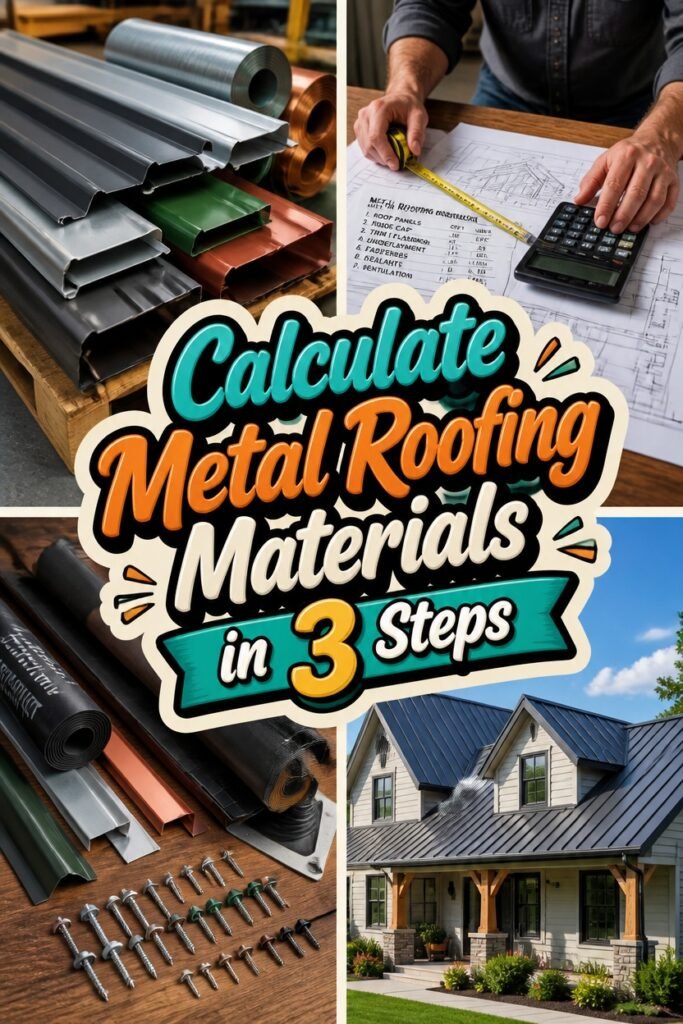
Metal roofing looks beautiful on a home, but getting the materials right takes a bit of planning. Small miscalculations can lead to delays, extra trips to the supplier, or worse, a shortage of panels right when you need them. Taking time to measure properly upfront saves both money and stress.
Start by figuring out your roof’s square footage, then factor in how steep it slopes. That pitch angle changes how many panels you’ll actually need, since steeper roofs cover more surface area than they appear to from the ground.
It also helps you calculate the right amount of underlayment and fasteners for the job. Waste factors deserve attention too. Cutting panels to fit around chimneys, vents, and edges always leaves scraps, so ordering exactly what the math suggests usually falls short.
Adding a small cushion for unexpected adjustments keeps your timeline on track and your budget intact.
Measure Your Metal Roof’s Square Footage and Pitch

Measurement forms the foundation for any metal roofing project. You need two key numbers: square footage and roof pitch.
Square footage tells you how much metal you’ll need. Start by measuring your home’s length and width from the ground. Multiply these numbers to get the base area. Then count your roof planes. A 30 by 40 foot home has 1,200 square feet per side. Multiply that by your number of planes for total coverage area.
Roof pitch shows how steep your roof is. You’ll see it written as a ratio like 4:12. This means the roof climbs 4 inches up for every 12 inches across. Steeper roofs have more surface area. That extra slope means ordering more material.
Good measurements keep your project on track. You’ll avoid running short on panels or overbuying. Your budget stays realistic from day one.
Determine Panel, Fastener, and Underlayment Quantities
Metal Panels
Divide your total square footage by the panel width. This gives you the number of panels needed.
Standing seam panels usually run 12 to 16 inches wide. Corrugated panels run wider, from 26 to 36 inches. Add 10 percent to your final count for waste and overlap.
Fasteners
Your fastener count depends on panel type and how you install. Standing seam systems use far fewer fasteners. Exposed fastener panels need one per rib.
Most exposed systems require 12 to 16 fasteners per square. Check your manufacturer specs to confirm.
Underlayment
Match your underlayment quantity to your roof square footage. One standard roll covers 1,000 square feet.
Choose between synthetic or felt underlayment. This choice affects your project cost and how well your roof holds up over time.
Calculate Waste Buffer and Place Your Order
Buffer for Waste
Extra material beyond your measurements keeps projects running smoothly. A standard 10-15% buffer covers cuts, overlaps, and mistakes.
Metal panels need 10-15% added to linear footage. Fasteners require 15-20% extra since some bend or strip during installation. Underlayment gets 10% more for proper seam coverage.
Placing Your Order
Order early to avoid delays and lock in availability. Include panel profile, color, gauge, and fastener details so suppliers send exactly what you need.
Suppliers quote based on total quantities, delivery timing, and site location. Finalizing orders wraps up material planning before work starts.
Frequently Asked Questions
What Is the Best Metal Roofing Material for Different Climate Conditions?
Aluminum suits coastal areas due to corrosion resistance. Steel performs well in moderate climates with proper coatings. Copper excels in wet regions, developing protective patina. Standing seam systems work universally, adapting to temperature fluctuations effectively.
How Long Does a Metal Roof Typically Last Compared to Other Materials?
Metal roofs typically last 40-70 years, substantially outlasting asphalt shingles which last 15-25 years. They surpass wood shakes and clay tiles in durability while matching slate longevity, offering superior weather resistance and minimal maintenance requirements.
What Is the Cost Difference Between Standing Seam and Corrugated Metal Panels?
Standing seam panels cost astronomically more—often doubling the price of corrugated alternatives. Property owners typically spend $8,000-$12,000 extra per installation due to standing seam’s superior durability, aesthetic appeal, and labor-intensive installation requirements.
Do I Need a Permit to Install a Metal Roof on My Home?
Most jurisdictions require homeowners to obtain a permit before installing a metal roof. Permit requirements vary by location, typically involving inspections to guarantee compliance with local building codes and safety standards.
Can Metal Roofing Be Installed Directly Over Existing Asphalt Shingles?
Metal roofing can be installed directly over existing asphalt shingles, though removal is often recommended. Proper ventilation and structural support must be verified first. Building codes vary by location, so local requirements should be consulted before installation.
Conclusion
Like a builder constructing a bridge, one must first measure the span, then gather materials, and finally account for inevitable losses. Metal roofing requires the same methodical approach: measuring square footage and pitch, calculating panel quantities with fasteners and underlayment, then adding ten percent waste. This structured process prevents costly errors, ensuring projects proceed smoothly from planning through completion.