
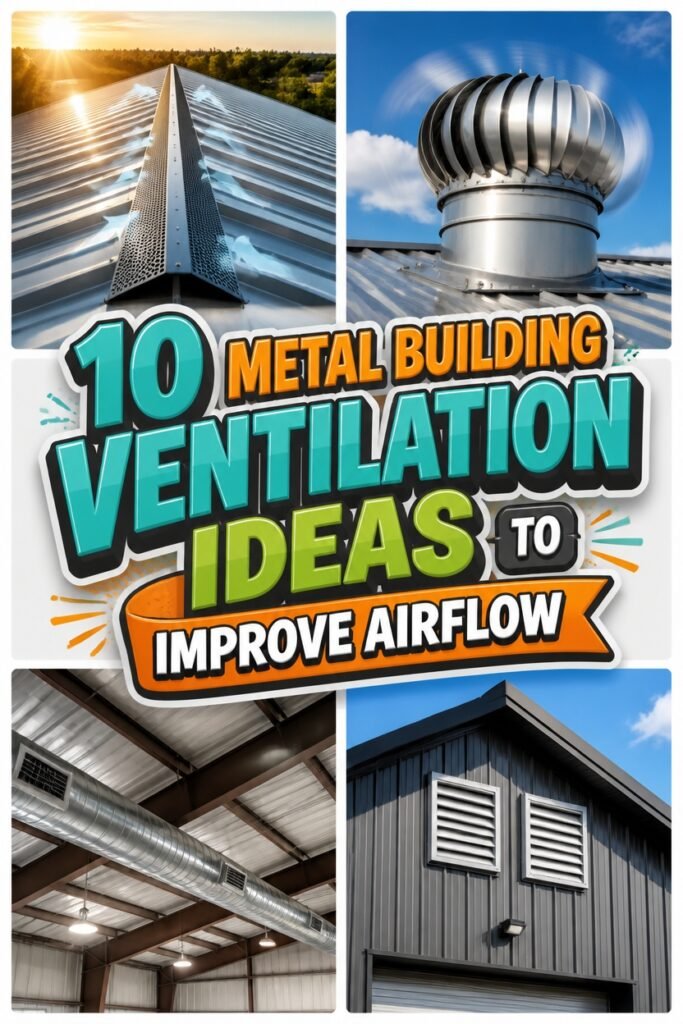
Metal buildings have a way of holding onto heat and moisture like nobody’s business. Walk into one on a humid afternoon and you instantly feel the difference.
Stale air lingers, condensation beads on walls, and that general stuffiness makes the space feel less like a workshop and more like a greenhouse.
The good news is that airflow doesn’t have to be complicated. Simple changes can transform how a metal building breathes, protecting your equipment and making the space far more comfortable to work in.
You have options that range from completely passive to fully powered. Ridge vents let hot air escape naturally from the peak. Exhaust fans pull moisture out on demand. Turbine vents spin with the breeze, requiring no electricity at all.
The right mix depends on your building’s size, your local climate, and how you use the space. Finding that balance is worth the effort.
A well-ventilated metal building stays drier, lasts longer, and simply feels better to spend time in.
Ridge Vents and Roof Ventilation
Why Ridge Vents Matter for Metal Buildings
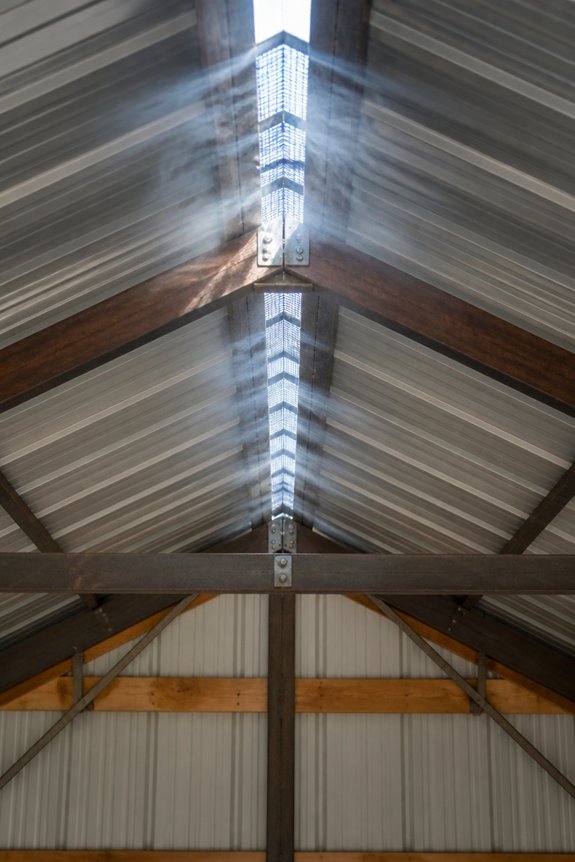
Metal buildings trap moisture and heat beneath their roofs. Ridge vents solve this problem by giving warm, moist air a natural escape route. They sit right at the roof peak and work through simple convection.
How Ridge Vents Work
Rising hot air needs somewhere to go. Ridge vents provide that outlet. This airflow cuts down on condensation and helps your roof last longer.
You’ll find two main styles. Continuous vents stretch the full length of the roof. Segmented vents sit at spaced intervals instead.
Pairing With Soffit Vents
Ridge vents perform best with soffit vents alongside them. Cool air enters through the sides. Warm air exits through the top. The result is steady airflow through the whole building.
Installation Basics
You’ll need enough attic space for these vents to function well. Intake ventilation at the lower levels completes the system.
Where They Work Best
Agricultural buildings, warehouses, and industrial facilities all gain from ridge vents. Any metal structure where moisture control counts will benefit.
Sidewall and Gable Vents for Cross-Airflow
Sidewall and gable vents create horizontal airflow. Ridge vents alone cannot achieve this. These vents allow cool air to enter on one side. It then exits on the opposite side or through the roof peak.
Sidewall vents sit near the bottom of exterior walls. They pull in fresh air during cooler periods. Gable vents go in the triangular areas beneath roof peaks. They help air move through the upper structure.
Together, these openings create cross-ventilation. This pattern reduces hot spots and moisture buildup.
—
Combining Vent Types
Metal buildings gain the most circulation by pairing these vents with ridge vents. Placement and size matter for sidewall and gable vents. Proper spacing ensures good airflow. This prevents dead zones where stale air sits.
Exhaust Fans for Powered Air Movement
Exhaust fans provide active air movement when natural ventilation falls short. These powered systems pull warm, humid air out of the building. Fresh air then flows inward through intake vents.
Metal buildings often use roof-mounted or wall-mounted exhaust fans. These units remove heat, moisture, and contaminants effectively. Centrifugal fans suit high-volume needs. Axial fans work well for moderate airflow.
Sizing depends on your building dimensions, occupancy, and heat sources. A 40-by-60-foot warehouse typically needs 4,000 to 6,000 cubic feet per minute.
Thermostats and humidity sensors can automate fan operation. The fans run only when conditions call for it. This saves energy while keeping indoor air quality and temperature in check.
Louvers and Intake Vents
Proper air intake starts with smart placement. Louvers and vents should welcome fresh air while keeping out rain, debris, and harsh sunlight.
Metal buildings do well with eave louvers along the perimeter. These create steady intake points near the roofline. Ridge vents pair naturally with these sources. Together they push stale air up and out. Gable vents work the same way on pitched roofs. Foundation vents add another option near ground level when needed.
Adjustable louvers give you control. You can change airflow based on seasons or building needs. Sizing matters too. Vents that are too small cause negative pressure. This hurts ventilation and overall performance. Built-in screening keeps pests out without blocking airflow.
Turbine Vents and Wind-Driven Systems
Wind-driven ventilation systems harness natural air movement to pull moisture and heat from metal buildings. No electricity is required.
Turbine vents, also called whirlybirds, spin when wind passes over them. This creates a vacuum that draws stale air upward and out. These devices work continuously whenever wind is present. That makes them reliable for passive ventilation.
These systems operate best in locations with consistent breezes. They pair well with intake vents positioned lower on building walls. Together they establish natural airflow patterns.
Turbine vents need minimal maintenance. An occasional cleaning is usually all that’s required.
Common models include roof-mounted units in various diameters. Sizes typically range from 12 to 24 inches. Installation works best at the building’s highest point. This placement maximizes air extraction efficiency.
Evaporative Coolers for Hot, Dry Climates
Metal buildings in arid regions face intense heat and little moisture. Evaporative coolers handle this well. These units, often called swamp coolers, pull hot air through wet pads. The air cools through evaporation. Then it circulates through your space.
Dry climates bring out the best in these systems. Humidity should stay below 40 percent. Arizona, New Mexico, and parts of California suit this technology perfectly. You will use far less electricity than with standard AC units. Your operational costs drop noticeably.
Installation usually places the cooler on a roof or exterior wall. Ductwork channels the cooled air indoors. Keep water pads and filters clean. This simple step ensures strong performance all season long.
Ridge and Soffit Vent Combinations
Ridge and soffit vents create passive airflow through metal buildings. Hot air rises and exits through ridge vents at the roof peak. Cooler outside air enters through soffit vents under the eaves. This natural circulation removes heat, moisture, and odors. No mechanical systems needed.
Proper Spacing
Spacing matters for airflow balance. Ridge vents should run continuously along the peak. Soffit vents need even distribution around the perimeter. A typical metal warehouse pairs one linear foot of ridge vent with one linear foot of soffit vent per ten linear feet of building length.
Installation Tips
Install vents carefully to block water and pests. Metal building manufacturers often recommend specific vent models. These match their panel systems and maintain weatherproofing for the building’s lifespan.
Ductwork and Zoned Air Distribution
Ductwork Basics
Metal buildings need smart ways to move air. Ductwork channels conditioned air to specific areas. This lets you control temperature and ventilation independently in different zones.
You have several options for duct materials. Flexible ducts work well for tight spaces. Rigid aluminum pipes offer durability. Fiberglass-lined ducts reduce noise and prevent condensation.
Zoned Distribution
Zoned systems use dampers, registers, and thermostats to direct airflow. They send air where you need it most. This targeted approach keeps energy costs down.
Warehouses often cool loading docks separately from offices. Manufacturing plants can isolate production zones with high ventilation needs from quiet administrative areas.
Smart Design Tips
Properly sized ductwork prevents pressure imbalances. It also cuts energy waste. Strategic placement of supply and return vents ensures consistent air circulation throughout your building.
Variable air volume systems adjust flow rates automatically. They respond to real-time zone requirements. This technology maintains comfort while reducing heating and cooling costs across diverse building sections.
Vapor Barriers and Condensation Control
Moisture issues can develop fast in metal buildings. Humid climates and temperature swings make this worse.
Vapor barriers belong on the warm side of insulation. They stop water vapor from sneaking in and condensing. Polyethylene sheeting works well for basic needs. Kraft paper suits some applications. Reflective barriers excel in specific setups.
—
Condensation Control Strategies
Ventilation and barrier placement work together as a team. Ridge vents and soffit vents pull air through the building. Exhaust fans kick out humid air when needed.
Some buildings need extra help. Chemical storage and food processing spaces benefit from dehumidification systems. Keep an eye on interior temperature and humidity. This prevents moisture from collecting on metal surfaces.
—
Maintenance Tips
Check your barriers regularly. Small tears or gaps weaken your protection. Fix problems quickly to avoid bigger headaches. Mold, rust, and material damage can follow if you wait too long.
Inspecting and Clearing Ventilation Blockages
Blockages in ventilation systems reduce airflow. They also trap humid air inside metal buildings. Common obstructions include dust, debris, and insulation material. Pest nests within vents and ducts are another frequent issue.
Regular inspections catch problems early. This prevents moisture damage, mold growth, and equipment failure. Catching issues now saves bigger headaches later.
Intake Vents, Exhaust Openings, and Ductwork
Building owners should examine these areas quarterly. Check for visible blockages during each inspection. Roof vents, soffit vents, and ridge vents need special attention. Leaves, bird droppings, and weather damage collect there often.
Clearing Debris and Blockages
Remove accumulated debris with appropriate tools. Always use proper safety equipment. Professional duct cleaning services work best for severe blockages. They also handle extensive systems more effectively.
Preventive Measures
Install vent screens to block unwanted entry. Maintain gutters to reduce debris buildup. Seal gaps where pests might enter. Regular maintenance ensures consistent airflow. It also protects interior conditions year-round.
Frequently Asked Questions
What Is the Typical Cost to Install a Complete Metal Building Ventilation System?
A complete metal building ventilation system typically costs between $3,000 and $15,000, depending on building size, ventilation type, and installation complexity. Larger facilities require proportionally higher investments.
How Often Should Ventilation Systems Be Maintained or Serviced Annually?
Metal building ventilation systems require maintenance a million times more often than owners think—typically twice yearly. Spring and fall inspections catch filter clogs, duct debris, and equipment wear before problems escalate into costly operational failures.
Which Ventilation Method Is Most Energy-Efficient for Metal Buildings?
Ridge vents combined with soffit intake vents represent the most energy-efficient ventilation method for metal buildings. This passive system leverages natural convection, eliminating electricity costs while maintaining consistent airflow and temperature regulation throughout the structure.
Can I Combine Multiple Ventilation Systems in One Metal Building?
Yes, combining multiple ventilation systems is feasible, practical, and recommended. Integrating ridge vents with louvers, pairing fans with natural ventilation, and layering mechanical solutions creates thorough airflow. This hybrid approach optimizes air circulation while maintaining cost-effectiveness and climate control.
What Permits or Building Codes Apply to Metal Building Ventilation Installation?
Metal building ventilation installations must comply with local building codes, ASHRAE standards, and OSHA regulations. Permits typically require structural assessments, airflow calculations, and safety documentation. Requirements vary by jurisdiction and building classification.
Conclusion
Metal building ventilation requires balancing passive systems, like ridge vents and louvers, with active solutions, such as exhaust fans and turbine vents. While natural airflow reduces energy costs, powered ventilation guarantees consistent air movement during calm conditions. Proper ductwork design, vapor barriers, and routine maintenance bridge this gap, preventing moisture buildup and heat accumulation. Strategic ventilation planning addresses both immediate comfort needs and long-term structural preservation simultaneously.