
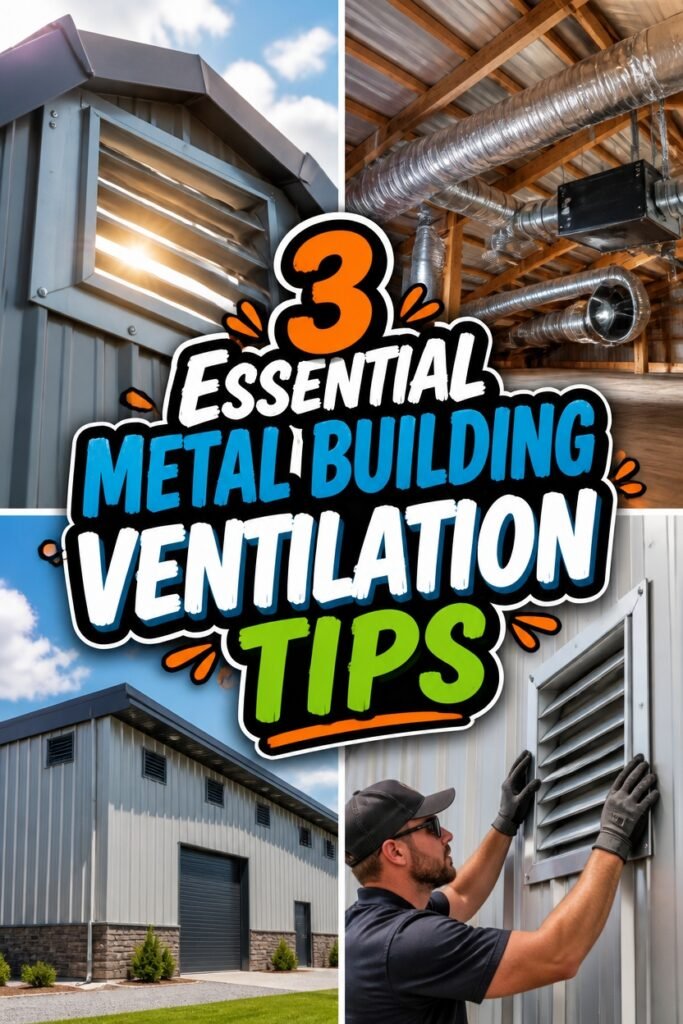
Metal buildings are incredibly practical, but they come with a few quirks. Heat loves to hang out in that steel shell, and moisture? It sneaks in everywhere.
Without good airflow, small problems turn into expensive headaches.
The good news is that smart ventilation keeps everything balanced.
Ridge vents up top, soffit vents along the edges, and well-placed openings work together like a quiet system. Air moves through naturally, and the building stays healthier for it.
Getting these three basics right protects your investment without much fuss.
No dramatic overhauls needed. Just steady, simple airflow that prevents damage before it starts.
Why Metal Buildings Need Proper Ventilation
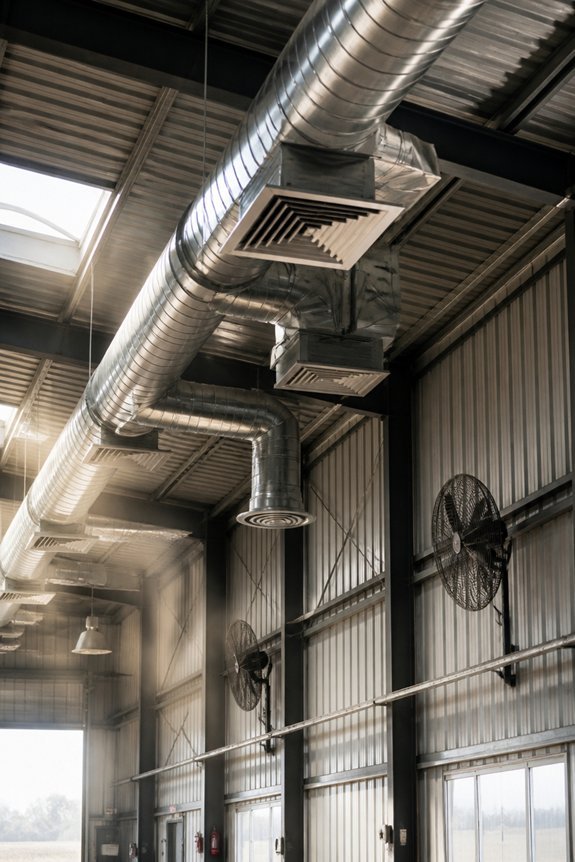
Condensation causes real problems in metal buildings. Moisture buildup and temperature swings can damage your structure over time.
Water vapor collects on interior surfaces without proper airflow. This leads to rust, structural wear, and mold growth. Metal conducts temperature quickly, so interiors cool faster than the surrounding air. The result is condensation that harms equipment, inventory, and building materials.
The Cost of Poor Airflow
Heat and humidity get trapped in specific areas. Workers feel uncomfortable in warehouses, and product quality suffers. Metal roofs and walls make matters worse. Unlike wood or concrete, they absorb zero moisture naturally.
Solutions That Work
Good ventilation solves these issues. It keeps moisture in check and stabilizes temperatures. Your building lasts longer with the right system in place.
Ridge vents pull hot air out from the top. Soffit vents draw fresh air in at the edges. Mechanical fans keep everything moving when natural airflow falls short. Together, these tools protect your investment and keep your space functional.
Install Ridge and Soffit Vents for Continuous Airflow
Ridge and soffit vents form the foundation of passive ventilation in metal buildings. Ridge vents sit along the roof peak. They let warm, moist air escape upward and outward.
Soffit vents fit under the building’s eaves. They pull fresh outside air in from below. Together, these vents create natural convection. You often won’t need powered fans.
This continuous airflow stops moisture buildup. It cuts condensation damage and helps your structure last longer. Hot air rises naturally in metal buildings. Cooler air enters through the lower openings.
Space your ridge and soffit vents properly. This ensures balanced airflow across the entire building. Check that your vent sizing matches your square footage and local climate. This step ensures ideal performance.
Calculate the Right Ventilation Size for Your Building
Why Vent Size Matters
Proper vent sizing makes or breaks a passive ventilation system. Buildings need openings equal to about one square foot per 150 square feet of floor space. Local codes and climate zones will adjust that number.
How the System Works
Ridge vents and soffit vents team up for airflow. Soffit vents pull fresh air in. Ridge vents let hot air flow out. A 40-by-100-foot metal building needs roughly 27 square feet of total ventilation area. Split that between intake and exhaust.
Common Sizing Mistakes
Small vents choke airflow. Moisture builds up. Temperatures climb. Large vents might waste some efficiency, but they rarely cause real trouble. Undersized vents are the real problem.
Getting It Right
Check your local building codes. Review manufacturer specs. These steps give you exact dimensions for your structure.
Frequently Asked Questions
How Often Should Metal Building Vents Be Cleaned and Maintained?
Metal building vents require inspection and cleaning at least twice yearly, preferably in spring and fall. More frequent maintenance may be necessary in dusty or debris-prone environments to guarantee ideal airflow and prevent system deterioration.
What Is the Cost Difference Between Various Ventilation System Options?
Like comparing apples to oranges, ventilation costs vary dramatically. Ridge vents range from $3-$8 per foot, while powered exhaust systems cost $1,500-$5,000 installed. Turbine vents fall between at $500-$2,000, depending on building size and materials chosen.
Can Existing Metal Buildings Be Retrofitted With Better Ventilation Systems?
Existing metal buildings can be retrofitted with improved ventilation systems through roof vents, sidewall louvers, or mechanical systems. Retrofitting feasibility depends on the structure’s design, current conditions, and budget constraints.
Which Ventilation System Works Best in Humid or Coastal Climates?
Ridge vents paired with continuous soffit vents work best in humid or coastal climates. They promote consistent airflow, prevent moisture accumulation, resist salt corrosion, and maintain structural integrity in challenging environmental conditions.
Do Metal Building Ventilation Systems Require Permits or Inspections?
Metal building ventilation systems typically require permits and inspections in most jurisdictions. Local building codes mandate compliance reviews before installation and occupancy to guarantee proper airflow, safety standards, and structural integrity are met.
Conclusion
Proper ventilation in metal buildings prevents moisture damage, mold growth, and structural deterioration. Implementing ridge and soffit vents, sizing openings at one square foot per 150 square feet of floor area, and maintaining systems regularly guarantees ideal airflow. Like a telegraph operator sending urgent messages, ventilation systems communicate building health through consistent performance. Building owners who prioritize these three essentials protect their investments and extend structure longevity considerably.